
Demo enemies include archive skeletons, with 15 variants across 5 kinds per community datamine. Verified encounters, honest counters and patch caveats.
Deep Dish Dungeon Enemies Guide: What Fights Back Down There
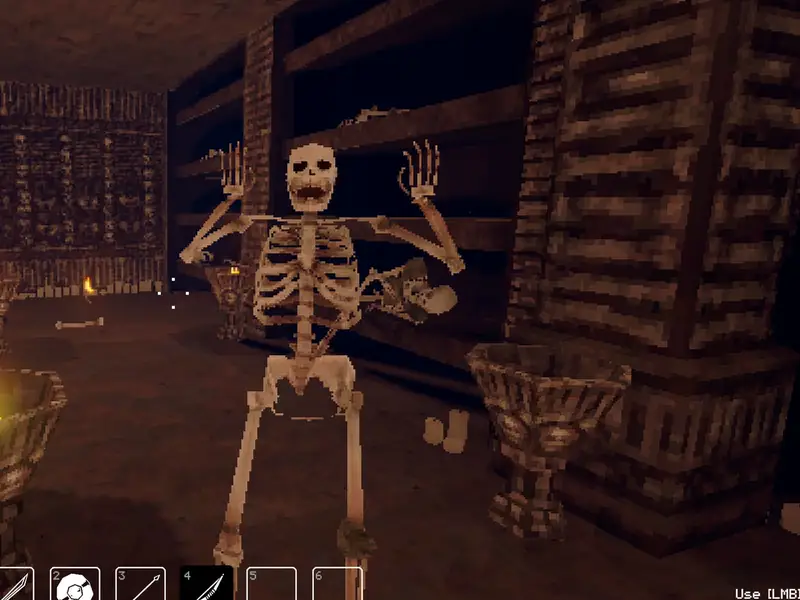
The demo dungeon is occupied, and the headline numbers come with a label attached: community dataminers report 15 enemy variants across 5 kinds in the demo build, but the developers have not confirmed that roster. What screenshots do confirm is the signature encounter, armed skeletons stalking archive shelves in the dark. This page separates confirmed sightings from community reports, gives no invented damage numbers, and sticks to counters you can verify: light, doors, positioning, spare weapons, and a cooked meal before the fight.
- Roster status: 15 variants across 5 kinds is community-reported from demo files, unverified by the developers.
- Confirmed sighting: skeletons among archive shelves, met in torchlight.
- Numbers policy: no damage, health, or spawn figures appear here, because none are officially documented.
- Patch caveat: enemy behavior and placement shift between builds, so version-tag your sources.
What the Demo Shows: Skeletons in the Archives
The clearest enemy evidence is a screenshot tableau: a skeleton standing armed among tall archive shelves, shelves of stored goods or records behind it, torchlight cutting the dark. That single frame teaches most of what the demo confirms. Enemies hold weapons, they occupy themed chambers rather than random corridors, darkness is the default condition of engagements, and your Torch is part of every fight whether you swing it or not.
The archive setting matters tactically. Shelves break lines of sight, create lanes, and limit how many enemies reach you at once. A skeleton between two shelf rows is a duel; the same skeleton in an open chamber with friends is a brawl. Read the room before the enemy: enter archives along the shelves, keep a shelf at your back where possible, and never let curiosity pull you into the middle of a dark room with unlit corners. The dungeon guide covers reading chambers this way in detail.
Expect skeletons to be the demo workhorse rather than the full story. One confirmed kind with melee weapons fits a demo scope: teach blocking, spacing, and light management against a readable foe, then escalate. Everything beyond skeletons belongs in the community-report section below, not in your plan, until screenshots or announcements confirm it.
Official source: Deep Dish Dungeon on Steam
The Reported Roster: 15 Variants, 5 Kinds, Unverified
Community miners digging through demo files report 15 enemy variants grouped into 5 kinds. That figure is specific, widely quoted, and entirely unofficial. No developer post confirms the count, the grouping, or the names, and file contents routinely include cut, unfinished, or renamed entries that never appear in playable builds. Treat the roster as a rumor with a spreadsheet, not a bestiary.
Why this page still mentions it: players will meet the number everywhere, and silence would not unquote it. The honest framing is simple. Five kinds plausibly means a melee line (skeletons seen), plus ranged, heavy, skirmisher, and specialist roles that most crawlers need, but those roles are inference, not data. Fifteen variants plausibly means tiered and armed versions within kinds, but which variants actually spawn in the demo is unconfirmed. If a guide names all five kinds with confidence and no file citation, it is presenting guesses as facts.
How to use roster posts safely:
- Demand file citations. Variant lists that quote file strings with a build number deserve attention; lists with neither deserve skepticism.
- Watch for cut content. Datamined entries often outnumber spawned enemies. Files describe possibilities, not encounters.
- Expect renames. Display names change late in development, so a datamined label may never appear above a health bar.
- Check the date. Roster posts decay with every patch. Unversioned bestiaries are historical documents at best.
The 15-variant, 5-kind figures come from player file-diving, not the developers, and patches add, cut, or rebalance enemies freely. Never plan a build around a specific unconfirmed enemy, and re-check roster claims after every update before quoting them to others.
Counters You Can Actually Verify
No damage numbers means no damage math, and this page refuses to invent any. What remains is stronger than it sounds: positioning, light, doors, preparation, and equipment redundancy, all verifiable from screenshots and systems the game visibly has.
Torchlight is battlefield control. Engagements happen in the dark, and the Torch is confirmed gear with a durability percentage. Light lets you see attacks coming, read rooms, and choose ground. That is the entire claim, and it needs no numbers: a lit skeleton is a solvable problem, and a dark corner is never empty until proven otherwise. Carry a spare Torch the way you carry a spare weapon, because light is a run timer. The crafting guide details Torch durability and backups.
Doors and shelves are tactics. Archive shelves split packs into duels, and doorways do the same anywhere they appear. Funnel enemies into lanes, fight one at a time, and retreat through a doorway when numbers turn bad. This is general crawler sense applied to confirmed architecture, not a claimed game mechanic, and it works regardless of patch tuning because geometry changes slower than stats.
Preparation beats reaction. Cooked meals change stats and grant abilities, so the correct counter to a hard chamber is often eaten at camp, not swung inside it. A meal before the archives, fresh weapons with full durability, arrows for targets across gaps: the fight is half won before you descend. See the cooking guide for the buff system and the honest limits of what is known.
Spares save runs. Weapons and shields wear down by percentage with no confirmed repair, so every engagement spends gear. Enter known-dangerous chambers on fresh equipment, keep the backup blade ready, and leave before the percentages do. Dying to a confirmed skeleton with a snapped sword is a planning failure, not a balance problem.
Recent patches sometimes adjust enemy placement and aggression before updating any documentation. The Steam announcement feed is the authoritative place to catch those changes, and the publisher page collects official reveals as new foes get shown.
Expect Patches to Reshuffle Everything
Enemies are the fastest-moving part of any early build. Placement, counts, aggression ranges, and even whole kinds change between demo updates, which is exactly why this page leans on method over data. Landmark-based navigation survives roster shuffles. Shelf-and-doorway tactics survive damage retunes. Spare weapons and cooked meals survive everything. Learn the transferable skills and let the numbers settle after release.
Concretely, re-verify three things after each patch: whether archive skeletons still hold the same chambers, whether any new kind has been officially shown, and whether community roster posts carry a current build tag. Ten minutes of checking beats ten hours of preparing for last patch enemies. The date reveal post frames the timeline those patches follow, and a second Steam announcement stream covers ongoing development notes.
Exact enemy health, damage values, spawn rates, and respawn timers do not appear here because no official source documents them. Any guide quoting those figures is citing datamined files or inventing them. Prefer method guides like this one until the developers publish real numbers.
FAQ
How many enemy types are in the Deep Dish Dungeon demo?
Community dataminers report 15 variants across 5 kinds in the demo files, but the developers have not confirmed any roster figures. Skeletons in the archives are the confirmed sighting. Treat every other kind as a rumor until screenshots or announcements show it, and check build tags on any bestiary you read.
How do I beat the skeletons in the archives?
Fight them lit and funneled. Bring a fresh Torch plus a spare, enter along the shelves so only one reaches you at a time, keep a shelf or doorway at your back, and eat a cooked meal at camp first since meals change stats. Carry a backup weapon because durability drains with no confirmed repair, and retreat through doorways when numbers turn bad.
Is the Torch a weapon or just a light?
Both, within verified limits. Screenshots confirm the Torch as gear with a durability percentage, it lights dark chambers where fights happen, and it can be swung in an emergency. This page claims no damage bonuses or special effects against any enemy, because none are officially documented. Treat it as essential light first and a backup weapon second.
Do enemies respawn, and do patches change them?
Respawn behavior is not officially documented, so no honest respawn timer appears here. Patches absolutely change enemies: placement, counts, and tuning all move between builds. Re-check roster claims and your own routes after each update, and rely on transferable tactics like lighting, funnels, and preparation that survive any retune.
Related Guides
- Dungeon Guide - Archive layout, landmarks, and mapless navigation for reaching fights on your terms.
- Crafting and Tools Guide - Weapons, Torch spares, and durability math that decide how many fights you can take.
- Demo Ending Guide - Where the demo descent ends, so your combat prep aims at the fights that matter.
More Deep Dish Dungeon Guides
How the Deep Dish Dungeon demo ends, what the thank-you screen means, and what the Prison Key door route still needs to confirm.
Deep Dish Dungeon FAQ: October 13, 2026 launch, free demo rules, price status, Game Pass, saves, map, co-op size, Mac, and cooking explained.
Deep Dish Dungeon news timeline: Raw Fury deal, February demo, Xbox Game Pass news, v1013 patch, and the October 13 2026 launch.
Deep Dish Dungeon launches October 13, 2026 on Steam and Xbox with day one Game Pass. Platforms, Play Anywhere, price status, and demo details.
Deep Dish Dungeon PC requirements: Windows and macOS for the full game, Windows-only demo, plus how to check specs on Steam.